Back to Insights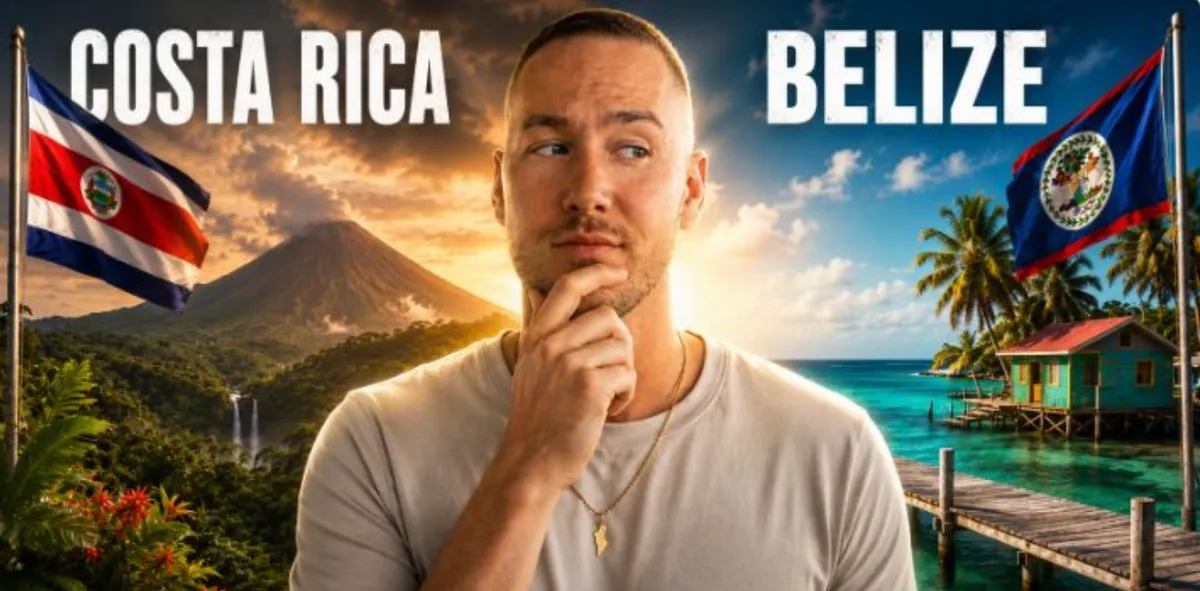
Belize vs. Costa Rica Real Estate: Which Country Is Better for Investment, Retirement & Living in 2026?
Will MitchellMay 13, 2026
We compare Belize and Costa Rica across real estate, taxes, residency, lifestyle, tourism, rental income, and long-term investment potential to help you decide which country is the better fit for living, retiring, or investing in 2026.
Belize vs. Costa Rica Real Estate: Which Country Is Better for Investment, Retirement & Living in 2026?
If you’re considering moving overseas, investing in international real estate, buying a vacation home, generating Airbnb income, or retiring in paradise, there’s one question that continues to dominate the conversation in 2026:
WATCH FULL VIDEO HERE: https://www.youtube.com/watch?v=jgpECHChwwk
Should you choose Belize or Costa Rica?
In our latest Will Mitchell Belize video, we travel through both countries to compare the real-world differences between these two rapidly growing Central American destinations — covering everything from real estate appreciation potential and taxes to lifestyle, tourism growth, residency options, healthcare, infrastructure, rental income potential, and long-term investment upside.
Both countries offer beautiful beaches, tropical climates, lush rainforests, wildlife, and strong tourism industries, but when you look deeper, they are very different markets with different opportunities depending on your goals.
Belize vs Costa Rica: The Core Differences
While both countries are located in Central America, their geography, culture, legal systems, and development stages differ significantly.
Belize borders Mexico and Guatemala and sits closer to the United States. Costa Rica borders Nicaragua and Panama and has become one of the most internationally recognized tourism destinations in Latin America.
Costa Rica is larger, more mountainous, and features volcanoes, surf beaches, and extensive road infrastructure. Belize, meanwhile, is smaller, more Caribbean-oriented, and home to hundreds of islands and cayes along the world-famous Belize Barrier Reef — the second-largest barrier reef system on Earth.
That reef system creates one of the biggest lifestyle and investment distinctions between the two countries:
Costa Rica is known for surf, Pacific beaches, volcanoes, and eco-tourism
Belize is known for turquoise Caribbean water, boating, fishing, diving, snorkeling, and island living
The video explores how these differences influence not only lifestyle, but also tourism demand, rental income, and real estate appreciation over time.
English-Speaking Belize vs Spanish-Speaking Costa Rica
One of the most important topics covered in the video is language and legal accessibility.
Belize is the only English-speaking country in Central America. Contracts, legal documentation, banking processes, and government systems all operate in English.
Costa Rica operates primarily in Spanish, which can create additional complexity for foreign buyers navigating:
Real estate transactions
Legal paperwork
Residency applications
Healthcare systems
Banking and tax structures
The video features multiple expats and investors explaining why the English-speaking environment in Belize made the transition significantly easier for them.
Foreign Ownership Rights & Coastal Property Laws
Foreign ownership rights are one of the biggest differentiators between the two countries.
Belize operates under a common law system with strong free simple title ownership rights for foreigners. In most cases, foreigners can directly own beachfront property in their personal name or through a U.S. LLC or international entity.
Costa Rica also has strong ownership protections, but coastal concessions create limitations in certain beachfront zones:
The first 50 meters from the coast are public land
The next 150 meters often operate under concession structures
Foreigners may require corporate structures for ownership in some areas
The video includes interviews with Costa Rican RE/MAX broker Gonzalo Vasquez, who explains Costa Rica’s legal purchasing process, HOA structures, luxury taxes, and title registration system in detail.
Real Estate Appreciation Potential: Belize vs Costa Rica
One of the biggest questions investors ask is:
Which country has more upside over the next 10–20 years?
Costa Rica already has a mature international tourism and real estate market with approximately 3 million annual tourist arrivals and extensive development throughout Guanacaste, Tamarindo, Santa Teresa, Jaco, and the Central Valley.
Belize, by comparison, receives roughly 560,000 overnight air arrivals annually and remains significantly earlier in its development cycle.
The video argues that Belize may currently be 10–20 years behind Costa Rica in terms of development stage, creating potential upside for investors entering the market earlier.
A major factor discussed is island economics.
Areas like Ambergris Caye and San Pedro have fixed land supply due to their island geography. As tourism and foreign investment continue increasing, supply constraints may create stronger appreciation pressure over time.
The video contrasts this against Costa Rica’s ability to continue expanding development inland and outward across larger land masses.
Tamarindo vs San Pedro Real Estate
A major portion of the video compares:
Tamarindo
vsSan Pedro
Tamarindo is one of Costa Rica’s top tourism destinations with surf culture, nightlife, luxury condos, and growing inventory levels.
The video discusses:
Rising inventory in Tamarindo
Softer pricing in some segments
Increased competition in short-term rentals
Occupancy trends
AirDNA-style rental metrics
Liberia International Airport growth
Meanwhile, San Pedro and Ambergris Caye are presented as more supply-constrained island markets with potentially stronger long-term appreciation fundamentals tied to scarcity.
Airbnb & Rental Income Potential
The video goes deep into vacation rental income opportunities in both countries.
In Costa Rica, the team tours a luxury villa in Playa Grande renting for approximately $465 per night while discussing:
Energy-efficient villa layouts
Occupancy pressures
ADR trends
Market saturation in some segments
Seasonality strategies
The Belize section features interviews with Elliott Bud, one of the country’s largest vacation rental operators, discussing:
Gross rental income potential
Net rental margins
Luxury villa demand
Group travel trends
BTB hotel taxes
Operational setup for owners
According to the interview:
High-performing Belize villas can gross approximately $150,000+ annually
Some luxury villas rent between $800–$1,000+ per night during high season
Net returns around 50% were discussed for optimized properties after stabilization periods
The video also features owners discussing how quickly their Belize properties began booking after launch.
Belize Taxes vs Costa Rica Taxes
Taxes became one of the strongest differentiators in the comparison.
The Belize advantages discussed include:
No capital gains tax
No estate tax
Extremely low annual property taxes
Lower short-term rental taxation
Favorable corporate tax structures in many cases
Costa Rica, meanwhile, includes:
15% capital gains tax
Luxury taxes on higher-value properties
VAT/sales taxes
Rental income taxation structures
Additional reporting obligations for corporations
The video repeatedly emphasizes the importance of consulting tax professionals while comparing the overall tax environments.
Residency Programs & Relocation
The video also compares residency pathways for retirees, investors, and remote workers.
Belize residency pathways discussed include:
Permanent residency after 12 months
Qualified Retired Persons (QRP) Program
Investor residency options
Work permits
Citizenship eligibility after residency periods
Costa Rica residency programs covered include:
Pensionado residency
Income-based residency
Investor residency programs
Temporary vs permanent residency structures
Costa Rica is described as having slightly more aggressive residency incentives, while Belize was highlighted for its citizenship pathway and English-speaking simplicity.
Infrastructure, Healthcare & Safety
Costa Rica was highlighted as having:
Better road infrastructure
More shopping and commercial development
More advanced medical systems
Multiple international airports
Larger urban infrastructure networks
Belize was presented as:
More laid back
Less overdeveloped
More authentic and Caribbean-focused
More nature-oriented
Less commercialized
The video also discusses natural disaster risks:
Belize: hurricanes
Costa Rica: earthquakes, volcanoes, seismic activity, tsunami risks
Luxury Real Estate Growth
Luxury real estate growth was another major topic.
The video features:
Multi-million-dollar penthouses in Tamarindo
Luxury villas in Belize
Emerging branded residence projects
Four Seasons entering Belize
Six Senses development activity
Rapid growth in Belize luxury real estate markets
Luxury growth rates in Belize prime markets were discussed in the range of roughly 9–14% annually in some areas, with certain properties reportedly experiencing even larger jumps during peak market periods.
Final Verdict: Belize or Costa Rica?
The conclusion of the video is nuanced.
Costa Rica wins in:
Infrastructure
Medical care
Road systems
Commercial development
Residency flexibility
Belize wins in:
Tax advantages
Ownership rights
Appreciation potential
Island economics
English-speaking accessibility
Scarcity-driven investment upside
Ultimately, the right country depends on your goals:
Retirement vs investment
Surf lifestyle vs island lifestyle
Established market vs emerging market
Pacific coast vs Caribbean reef living
For investors focused on long-term upside, taxation, and scarcity-driven appreciation, the video argues Belize currently presents one of the most compelling emerging real estate opportunities in the Caribbean Basin.
Keep reading
Related Articles
01Market Update
Mahogany Bay Village Belize - Update April 2026
Read article
02Market Update
Seller Financing in Belize: How Foreign Buyers Structure Owner Financing When Mortgages Aren't Available
Read article
03Market Update
Belize Hospitality Market Report 2026: Why Investors Are Watching Belize Real Estate
Read article
On the market
Featured Properties
Explore some of our newest and most exclusive listings currently available in Belize.
Next step
Ready to start your search?
Connect with a buyer advisor who lives in Belize and knows the market inside out.