Back to Insights
Belize vs Panama Airbnb: Why the Data Favours Belize’s Vacation-Rental Market
Will MitchellOctober 26, 2026
Will Mitchell compares Belize and Panama’s Airbnb markets through occupancy, annual gross revenue, hotel competition, new supply, and island economics, explaining why he favours Belize for premium vacation rentals.
Panama City had the busier calendar. The Belize markets in my comparison generated more annual gross revenue.
That is the gap I wanted to understand.
On my trip through Panama, I toured spectacular properties and sat down with people who know the market. The skyline, the infrastructure, the banking sector, the international connections: Panama has serious advantages. I gave it credit for those throughout our comparison.
For a vacation-rental investor, though, I want to follow the money through the entire market. Who is booking? What are they willing to pay? How many competing rooms are available? How quickly can developers add more? And what does the owner keep after paying to deliver the experience?
 My Belize vs Panama Airbnb conclusion favours Belize for a well-positioned leisure property. The opportunity comes from premium vacation demand, a smaller accommodation base, and homes that can offer something meaningfully different from a city hotel or apartment.
Here is how I get there.
71% occupancy gets your attention. US$50,000 average annual gross changes the conversation.
In the market snapshot I used for this comparison, five numbers put the opportunity into focus:
70–71% occupancy in Panama City. The city was selling a greater share of its available nights.
50–60% occupancy across the two Belize markets I highlighted. Belize had more room in the calendar.
Approximately US$50,000 average annual gross revenue in the two leading Belize markets I selected. This is where the leisure-market opportunity starts to stand out.
Approximately US$20,000 average annual gross revenue in Panama City and Bocas del Toro. That was the Panama side of my revenue comparison.
2.5 times the average annual gross revenue in the selected Belize markets. The rate a guest will pay can change the entire income picture.
Panama City’s occupancy is a real strength. A busy international city gives an owner more reasons for guests to arrive throughout the year. Belize’s advantage in my comparison was the revenue generated from the nights it sold.
Those estimates are the starting point for my market selection. The property-level decision comes next, with comparable homes, acquisition costs, operating expenses, and the weeks an owner plans to use personally.
The underlying relationship is straightforward:
Annual accommodation revenue = paid nights × realized nightly rate.
A market can sell fewer nights and generate more revenue when guests pay enough for the nights they book. That is why I pay so much attention to the type of vacation experience a property can sell. Filling the calendar at a discount can make an occupancy report look impressive while leaving an owner with a much less exciting income statement.
 The guest you attract shapes the rate you can charge
Panama City has a powerful business-travel engine. Finance, trade, the canal, and international connections bring people into the city for reasons that extend well beyond a beach holiday. That supports room demand, including demand for established hotels.
During our conversations in Panama, I kept coming back to travelers choosing a familiar hotel brand and using their loyalty points. For that guest, a convenient location, dependable service, and a recognizable booking experience can carry enormous weight. An individual apartment enters a competitive field with professionally operated hotels and other conveniently located apartments.
Belize’s leisure proposition gives me a different opportunity. A family planning a Caribbean vacation is choosing where to spend time together. A group coming to dive, fish, or explore the reef is choosing a home base for the trip. They can value bedrooms under one roof, private outdoor space, water access, and a place that feels like part of the vacation.
That gives a distinctive Belize home several ways to justify its nightly rate. The accommodation becomes part of what the guest traveled to experience.
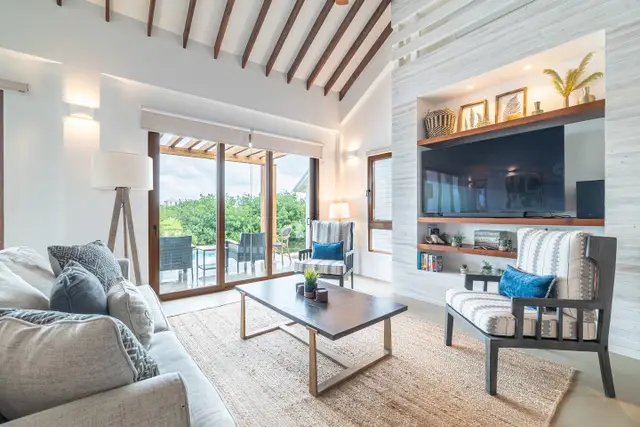
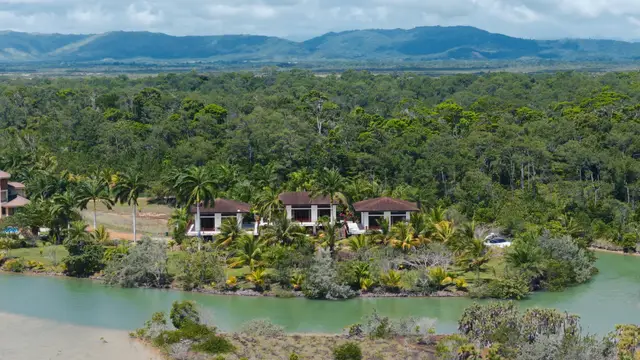
I saw that clearly in the Mahogany Bay home we toured: three bedrooms, individual en-suite bathrooms, a private pool, and living space opening outdoors toward the canal. The family or group can stay together and get out on the water from the community. That is a coherent vacation product.
Panama also has excellent leisure markets. I specifically identified Boquete as an area worth exploring, and Bocas del Toro attracts visitors looking for an island experience. My preference for Belize comes from the strength of its premium leisure proposition and the supply conditions around it.
Hotels and villas compete differently
The scale and composition of the accommodation market make this comparison especially interesting:
Roughly 27,000 traditional hotel rooms in Panama versus 6,000 in Belize in my comparison. That is a substantial difference in the hotel competition surrounding a vacation rental.
27,112 hotel rooms nationwide in Panama in 2025. The Tourism Authority counted 39,276 rooms across all registered accommodation categories, giving a fuller picture of the country's lodging supply. Panama Tourism Authority accommodation inventory
11,397 rooms across 1,256 accommodations in Belize in 2024. Hotels, villas, and other registered accommodation businesses contribute to that national total. Statistical Institute of Belize, 2024 accommodation tables
966 Belize establishments had just 1–10 rooms in 2024. That is roughly 77% of all 1,256 registered establishments. Small establishments make up the overwhelming majority of the registered accommodation businesses. BTB’s 2024 accommodation digest
Only 25 Belize establishments had more than 50 rooms in 2024. The lodging market has a distinctly smaller-scale character. BTB’s 2024 accommodation digest
For the kind of vacation home I like working with, that is a compelling setting: a smaller accommodation base, a strong leisure identity, and a market shaped heavily by smaller properties.
The distinction between a room and an accommodation matters here. A hotel can contribute dozens of rooms under one registered establishment. A small villa can contribute a handful. An investor buying a three-bedroom home needs to understand both the wider lodging market and the much narrower group of properties competing for the same guests.
For a Belize villa, I would study comparable entire homes with similar bedroom counts, waterfront access, private amenities, and management standards. Those are the properties that help establish a realistic rate. The national inventory tells me the size of the market; the local competitive set tells me how the home can perform.
 Panama City can build more units above the same piece of land
One question kept coming up as we moved through Panama City’s premium neighborhoods: where are the houses?
The towers make an immediate impression. Panama concentrates a substantial share of its population and economic activity around the capital, and the central neighborhoods we toured offer a very vertical version of luxury living.
My local expert explained the pressures shaping that development: the canal to one side, mountains inland, and mangroves, the airport, and the coastline influencing where expansion can happen. He also pointed to American influence on the city’s architecture and development model.
 For an investor, the important connection is between limited central land and the ability to add many apartments on a single site. A new tower can bring a significant number of potentially competing units into a neighborhood. Panama’s banking and financing environment can help developers deliver those projects.
That creates a question I want answered before buying: how many comparable units will open during my first three years of ownership?
The wider metropolitan area includes extensive low-rise neighborhoods. My concern is the development pattern and competing inventory around the specific urban property I would buy.
New supply deserves as much attention as today’s occupancy
Every additional comparable property gives the next guest another choice. Here is the supply picture that caught my attention:
716 short-term-rental units in Bocas del Toro, up 23.4% over the preceding year, in the research snapshot I used for my comparison.
705 additional Panama City listings in 2025, according to Airbtics’ separate published review.
36.75% Panama City listing growth over that year. That is a substantial expansion of the pool of properties competing for bookings.
US$20,712 estimated annual revenue and 68% occupancy in Panama City in the same 2025 review. These figures give a dated view of how the city was performing as supply expanded.
15.59% annual revenue growth in that Panama City review. The city was absorbing substantial new supply while improving revenue. Airbtics’ Panama City market review for 2025
That is exactly why I look at supply and demand together. New construction creates future competition; growing overnight demand can help absorb it. The investment question is whether the particular property can keep its pricing power as both change.
Panama’s air connections help. I also want to know how many travelers stay locally, how long they stay, and which accommodation they choose. Connecting passengers become rental demand when they actually book a local stay.
Belize’s smaller inventory has a different growth story
I put Belize’s typical longer-run rentable-room growth at roughly 3% a year. Historical official figures give that discussion useful context:
7,377 registered rooms in 2013. That is the starting point for a useful ten-year view of Belize’s accommodation supply. SIB’s 2013 accommodation inventory
10,028 rooms in 2023, equivalent to approximately 3.1% compound annual growth over that decade. The longer-run figures show the relatively measured pace at which the room base expanded. SIB’s 2024 statistical abstract
11,397 registered rooms in 2024, an increase of approximately 13.7% over 2023. The Belize Tourism Board identifies registration and compliance efforts as contributors to that increase, alongside the changing accommodation market. Belize Tourism Board’s 2024 accommodation digest
Tracking registered supply includes properties entering the official count as well as physical development. I want to understand both when judging how much competition is arriving around a property.
For me, the takeaway is the scale and pace of the market. Belize has historically grown from a relatively small lodging base. New villas and resort projects deserve close attention, particularly in the neighborhood where you intend to buy.
There is another movement within that supply: homes changing how they are used.
I would track three kinds of transactions around any property I was considering:
An existing vacation rental becomes a full-time retirement home. When the buyer moves in and stops renting to guests, one home leaves the rental pool.
A newly built home goes straight into personal use. That home may never enter the guest inventory, even though it adds to local construction.
An investor buys a home and offers it to guests. That purchase can move available rental supply in the other direction.
That change of use is central to the retirement demand I discussed on the trip. The relevant number is the net change in homes actually offered to guests. Counting construction alone misses the changes in owner use that shape availability.
 Island scarcity makes the location inside Belize especially important
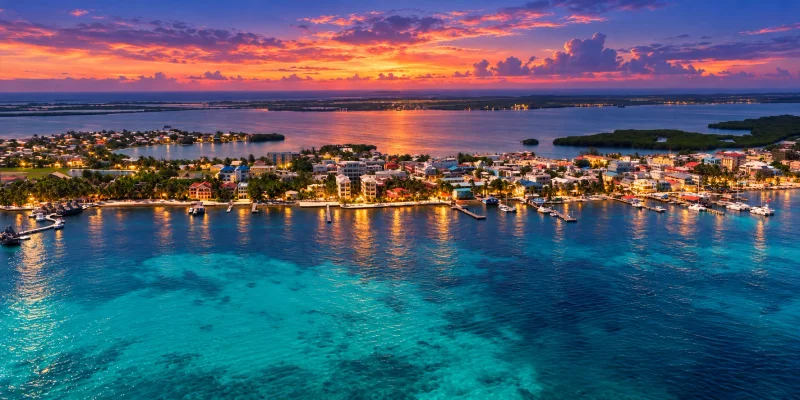
Ambergris Caye adds another layer to the investment case. The attraction combines the island itself, access to the reef, and particular waterfront locations that are difficult to reproduce.
A well-positioned canal-front or beachfront property has characteristics guests and future buyers can understand immediately. As tourism and buyer interest grow, those characteristics can support both rental appeal and resale demand.
Panama has islands too. That matters because Bocas del Toro can share some of these same economics. I also found encouraging signs in Panama’s for-sale inventory during my conversations there. I gave Belize a slight edge on appreciation; the vacation-rental revenue comparison was the more striking difference.
For any island investment, I would examine access, infrastructure, permitted development, and the immediate building pipeline. New density can change competition even where the underlying land is scarce.
Belize’s earlier development stage creates opportunity and puts more execution on the owner. On my own Secret Beach build, I discussed an approximately US$100,000 budget for solar, backup generation, water catchment, and septic infrastructure. That capital belongs in the investment calculation from day one.
Turn the market advantage into a property that works
My preference for Belize becomes actionable when three parts of the deal line up:
A guest proposition worth paying for. Choose the leisure segment, then find the property that suits it. Families, couples, and dive groups can want very different homes.
A competitive position that can hold up. Study comparable rates, seasonal bookings, new developments, and the supply of similar homes nearby.
An operating plan that preserves the income. Include management, utilities, insurance, maintenance, replacements, taxes, and financing in the numbers. Include the full purchase and setup cost when assessing the return.
Rental permission also belongs in that plan. For a Panama district property offering stays under 45 days, establish the required public-tourism-accommodation approval and the building’s rules before relying on short-stay revenue. In Belize, establish the property’s licensing and management arrangements with the relevant professionals. Panama’s published tourism-lodging enforcement framework
Where I would start in Belize
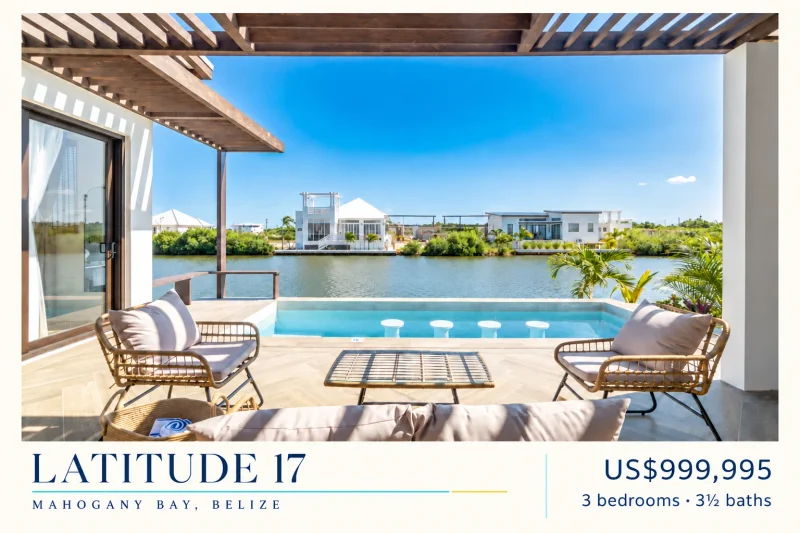
For a concrete example of the kind of property I mean, our team lists The Latitude 17 in Mahogany Bay at US$999,995 at the time of writing. It has three bedrooms, three-and-a-half bathrooms, a private pool, canal frontage, boat access, en-suite bathrooms, and a backup generator.
That combination gives us a clear guest proposition to evaluate. From there, I want comparable booking performance, the full operating budget, and a purchase plan built around your income goals and personal use.
Panama impressed me. For the investor targeting a premium Caribbean vacation rental, Belize is where I see the stronger opportunity to earn through the experience itself: a home guests choose for their holiday, in a smaller market, with a location and layout that support the rate.
Watch the full Belize vs Panama comparison, then tell our team your budget and rental goals. We can start with the market case and work toward the Belize property that makes the numbers fit.


On the market
Featured Properties
Explore some of our newest and most exclusive listings currently available in Belize.
Next step
Ready to start your search?
Connect with a buyer advisor who lives in Belize and knows the market inside out.