The Indian and Sikh presence in Belize isn't large. It isn't loud. But it shows up where it matters — commerce, law, and government. Small in number, but present in the parts of the country that actually shape how it works.
Early Indian & Sikh Presence in Belize
The story begins in the 19th century. After the upheaval of the Indian Rebellion of 1857, small numbers of Indians were moved through the British Empire, including to what was then British Honduras. Others arrived later through Caribbean routes.
There was no mass migration. No political bloc. Just individuals and families building a foothold through trade. Over time, many moved into small business — shops, distribution, and supply chains that connected Belize to imported goods.
In a small country, those roles matter more than they might elsewhere. The Sikh presence sits within that broader Indian story. Never dominant. But consistently present.
The Role of Merchant Communities
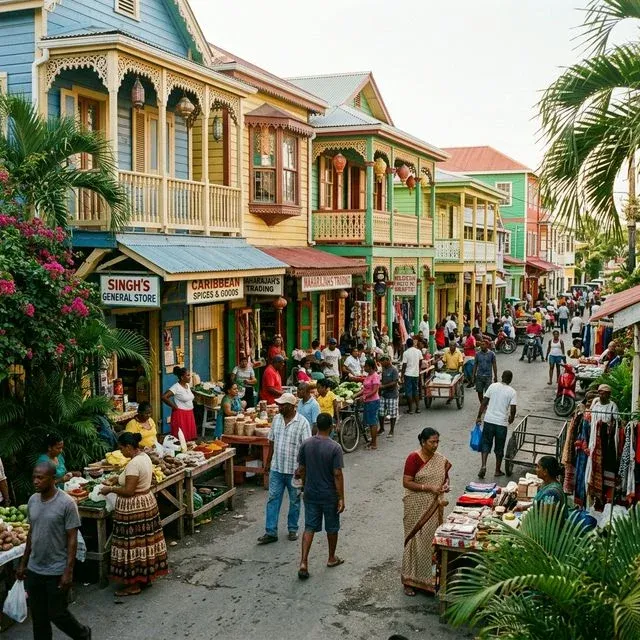
Belize doesn't run on scale. It runs on relationships. Merchant families became part of daily life. They supplied goods, extended credit, and connected communities across the country.
This wasn't centralized influence. It was embedded function. Over time, these networks became part of how Belize operates. Quiet, consistent, and essential.
Prominent Sikh and Indo-Belizean Figures
Where this becomes visible is at the level of institutions. The community may be small, but it reaches into the structure of the country.
George Singh — Serving on the Supreme Court places someone at the center of how Belize functions. Property rights, contracts, and disputes all pass through that system. For anyone looking at Belize from an investment perspective, that matters more than most people realize.
Kevin Singh — His son has held senior roles connected to national governance, including areas tied to policing and public safety. That represents a different layer of influence — not judicial, but operational.
Bob Dhillon — Dhillon operates at the international level. As Honorary Consul for Belize in Canada, he connects the country outward — to investors, capital, and institutions abroad.
Taken together, the pattern is clear:
- Judiciary
- Government
- International investment
That is not a peripheral presence. That is integration into the system.
Sikh Identity in a Belizean Context
Belize is not a country that draws hard lines between groups. It layers identity. Maya, Creole, Garifuna, Mestizo, East Indian — all exist within the same national framework.
The Sikh presence follows that pattern. Identity is maintained, but it doesn't sit apart. It integrates into the broader structure of the country.
This isn't about losing identity. It's about operating within a system that absorbs influence rather than isolating it.
Modern Influence and Investment Links
Today, the story shifts from migration to connection. Belize is increasingly tied to Canada through tourism, real estate, and capital. Flights are direct. The legal system is familiar. The barrier to entry is low.
Figures like Dhillon sit directly in that flow. They represent something important for investors: Belize is not isolated. It's connected. Capital moves where there is familiarity and trust. Belize has both — it just doesn't advertise it aggressively.
A Quiet but Structural Contribution
The Sikh story in Belize isn't loud. It doesn't dominate the national narrative. But it runs through the system.
From early trade networks to positions in law, government, and international investment, the pattern is consistent. Small footprint. Real influence.
And that matters. Because countries that function well are usually built on distributed influence, not concentrated power. Belize is one of those countries. If you're trying to understand how it works — not just how it looks — this is part of the picture.