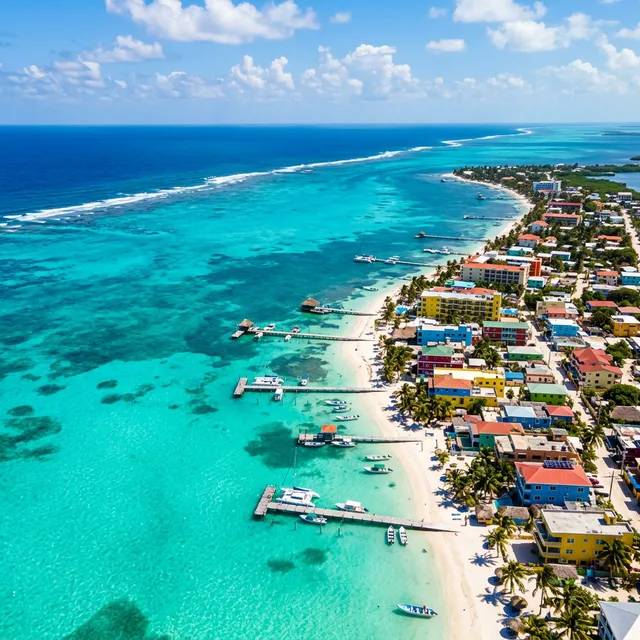
If you search Belize online, one image dominates everything: A turquoise coastline with a darker ribbon offshore — the Belize Barrier Reef. But the reef isn’t just a postcard. It’s one of the most ecologically significant marine systems in the world.
If you search Belize online, one image dominates everything: A turquoise coastline with a darker ribbon offshore — the Belize Barrier Reef. But the reef isn’t just a postcard. It’s one of the most ecologically significant marine systems in the world. And its importance goes far beyond diving photos and tourism brochures.
So why is the Belize Barrier Reef so important? The short answer: biodiversity, protection, and global conservation leadership. The longer answer explains why Belize remains structurally different from many other coastal markets.
The Second-Largest Barrier Reef on Earth
The Belize Barrier Reef stretches roughly 190 miles along the country’s Caribbean coast. It is the second-largest barrier reef system in the world, after Australia’s Great Barrier Reef. In 1996, UNESCO designated the Belize Barrier Reef Reserve System as a World Heritage Site due to its extraordinary biodiversity and ecological value.
The reef system includes:
- Seven marine reserves
- Three atolls (Turneffe, Lighthouse, and Glover’s Reef)
- Hundreds of cayes
- Mangrove forests
- Seagrass beds
This ecosystem supports more than 500 species of fish and over 100 species of coral, along with endangered sea turtles, manatees, and multiple shark species. It’s not just beautiful. It’s biologically dense.
The Great Blue Hole and Global Recognition
One of the reef’s most famous features is the Great Blue Hole — a massive marine sinkhole nearly 1,000 feet across and over 400 feet deep. Marine explorer Jacques Cousteau declared it one of the top dive sites in the world after exploring it in the 1970s. Today, it remains one of the most recognized underwater formations on the planet.
That visibility matters. Because the Blue Hole and the broader reef system helped put Belize on the global environmental map long before real estate investors began paying attention.
Belize’s Environmental Leadership
What truly differentiates Belize is not just the reef itself — but how the country has chosen to protect it. In 2017, Belize became the first country in the world to permanently ban all offshore oil exploration in its waters. That decision was widely praised by environmental organizations and helped secure the long-term protection of the reef.
In 2018, UNESCO removed the Belize Barrier Reef from its “World Heritage in Danger” list after the government implemented stronger conservation measures.
Belize has also:
- Banned bottom trawling
- Expanded marine protected areas
- Committed to protecting 30% of its ocean territory
- Participated in innovative debt-for-nature conservation agreements
For a country of under half a million people, that level of policy commitment is significant.
Why the Reef Matters Economically
The Belize Barrier Reef is not just an ecological asset. It is an economic engine.
Tourism is one of Belize’s largest economic drivers. A significant percentage of overnight visitors come specifically for marine tourism — diving, snorkeling, fishing, and reef excursions. Healthy reef translates to sustained tourism demand.
And sustained tourism demand supports:
- Hospitality businesses
- Vacation rental markets
- Coastal real estate values
- Local employment
In many coastal countries, aggressive development eventually degrades the very asset that drives demand. Belize’s conservation-first approach reduces that risk. Environmental protection here functions as a long-term value stabilizer.
The Reef as a Natural Supply Constraint
There’s another layer that often gets overlooked. The reef sits offshore, parallel to much of Belize’s coastline. That geography shapes development patterns.
In many areas, the reef naturally limits where large-scale marine infrastructure can be built. Environmental protections further restrict high-density coastal overdevelopment. This means Belize’s coastline cannot expand endlessly.
For investors, geographic constraint tends to matter over time. Supply does not grow infinitely. That doesn’t guarantee appreciation — but it does reduce the risk of uncontrolled saturation.
Climate Change and Ongoing Challenges
No serious conversation about coral reefs can ignore climate change. Like reef systems worldwide, Belize’s reef faces stress from rising ocean temperatures and coral bleaching events. Conservation groups and marine scientists actively monitor reef health, and restoration programs are ongoing.
Belize’s relatively low population density and limited industrial footprint, however, reduce some of the pressures seen in more heavily developed regions. The country’s long-term environmental credibility rests on maintaining that balance.
Why This Matters to You
If you’re researching Belize for travel, the reef is obvious. If you’re researching Belize for retirement or investment, the reef is structural. It underpins tourism demand. It supports economic activity. It constrains reckless overbuilding. It anchors Belize’s global identity.
Markets driven by natural assets either protect those assets — or erode them. Belize has made it clear which path it intends to follow.
Considering Coastal Real Estate in Belize?
If you’re exploring Ambergris Caye, Placencia, or other coastal markets, the reef isn’t just a view — it’s part of the long-term equation. Understanding how environmental protection shapes development patterns is essential before purchasing waterfront property.
The RE/MAX Belize team works directly with investors evaluating coastal assets across the country. We help you understand not just what you’re buying — but the environmental and structural forces that support it.
Contact Will Mitchell and the RE/MAX Belize team to discuss coastal opportunities in Belize and how conservation policy shapes long-term positioning.
Sources
- UNESCO World Heritage Centre – Belize Barrier Reef Reserve System
- Government of Belize – Offshore Oil Moratorium Act (2017)
- International Monetary Fund – Belize tourism data
- Belize Ministry of Blue Economy and Civil Aviation
- National Geographic reporting on Belize reef conservation