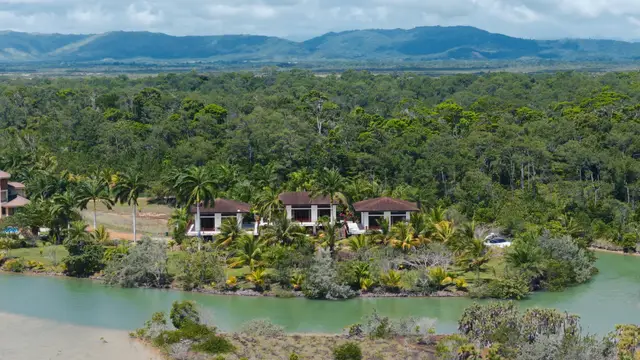
A practical Belize jungle packing list covering trail clothing, tick protection, footwear, wet-cave gear and the check-and-dry routine after an outing.
A rainforest morning can mean a damp trail, a steep climb and a swim before lunch. Pack for the walk and the water, then give yourself something dry to come back to. A useful Belize jungle packing list starts with clothes that help manage heat, bites, mud and moisture.
Get dressed for the trail before you leave
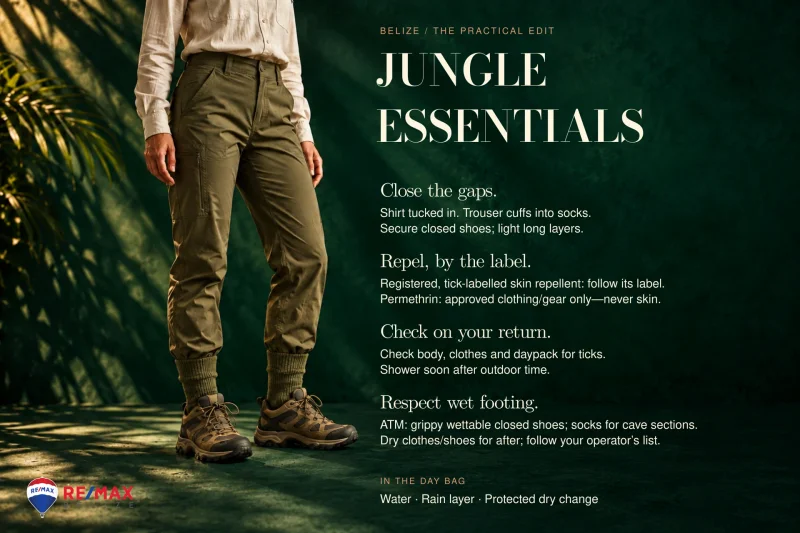
Long layers make sense in the forest, even when it is warm. Choose light, breathable clothing with enough room to move, then pay attention to the gaps around your ankles and waist. CDC traveller guidance recommends long sleeves, long trousers, tucked-in shirts and closed shoes as part of bite prevention.
Wear long trousers with socks high enough to tuck the trouser cuffs into. Tuck your shirt into your waistband too, reducing the openings through which ticks can reach your skin.
Choose lighter-coloured trail clothing. It makes crawling ticks easier to notice when you check your clothes.
Pack a breathable long-sleeved shirt. A lightweight woven shirt can give you coverage without the weight of a sweatshirt.
Bring socks that fit your walking shoes comfortably, plus dry spares. Try the combination before travelling so seams or bunching do not become a surprise halfway through a hike.
For sweaty days, quick-drying nylon or polyester blends are useful. Check the weight and feel, not just the fibre label. Save your airy cotton or linen pieces for lodge time and easier outings; heavy denim is a poor match for repeated soaking.
Finish your bite protection
Clothing works best alongside repellent and a check when you return. Two items have different jobs:
Skin repellent: bring a registered skin repellent labelled for the insects or ticks you want protection from. Follow its directions for application and reapplication, including after swimming or heavy sweating. Apply to exposed skin as directed, not beneath clothing.
Treated clothing: for trail days, consider factory-treated clothing or a permethrin product specifically labelled for clothing and gear. If treating items yourself, do it before the trip and allow them to dry as directed. Permethrin goes on approved clothing or gear, never directly on skin.
CDC recommends these measures for travellers. On the walk itself, stay in the centre of established trails where possible, avoiding unnecessary contact with tall grass and brush.
Pack shoes for the ground beneath you
A lodge path and a steep waterfall trail deserve different consideration. Bring secure walking or trail shoes with useful tread. Chaa Creek lists boots or tennis shoes for its trails, while Jade Jungle Resort includes trail runners in its packing guidance. Ask about the route you have booked.
Before packing, inspect the tread, seams and attachment of the soles. An old favourite that is coming apart will not improve once it is wet.
For swimming holes, water-friendly footwear can help. One traveller who visited Hopkins and Mountain Pine Ridge wrote:
“i brought my Tevas for when i entered the springs/water holes because the rocks have a lot of algae and can get slippery.”
— u/k1mcheechicken, Reddit
Keep a small day bag ready with:
A compact rain jacket for showers.
A refillable water bottle, filled before leaving. Confirm the day’s drinking-water supply and refill opportunities with your guide.
A dry change protected inside a waterproof bag, especially when swimming is followed by a drive back.
A small torch or headlamp with spare batteries for lodge paths or a guided evening walk.
Give a wet cave day its own kit
ATM Cave combines hiking, river crossings, swimming and movement over rocks. Wear swimwear under quick-drying shorts or trousers and a lightweight long-sleeved top. Leave room to climb and stretch, and follow the operator’s instructions.
Secure, grippy closed-toe shoes that can get thoroughly wet.
Socks for the chamber where shoes are removed.
A full dry change, including underwear and footwear, for afterward.
A separate bag for wet clothes during the journey back.
Shoe condition matters here as much as shoe type. A traveller reviewing their ATM visit warned:
“Be sure they are not old and the sole doesn't delaminate. (Like mine did and came off!)”
— 1maxfamily, Tripadvisor
Keep the swimming-hole sandal choice separate from your cave footwear. Check each booked activity’s requirements: tubing, swimming and climbing through a cave ask different things of your shoes.
Back at the lodge: check, change and dry
After each forest outing, spend a few minutes checking before settling into the hammock.
Check your whole body for ticks, including around the hair and ears, underarms, waist, belly button, groin and behind the knees. Use a mirror for hard-to-see areas.
Inspect clothing and your daypack too. Ticks can travel back on gear even when you have covered up.
Shower soon after returning. CDC advises showering within two hours; it can help wash off unattached ticks and provides a chance for a thorough check.
Unpack wet clothes and shoes so they can dry. Keep a dry outfit in reserve: humidity can slow drying even with performance fabrics.
Ask the lodge about laundry and drying facilities before relying on a tiny clothing rotation. For ticks on already-dry clothing, CDC advises a high-heat dryer for 10 minutes; damp clothes need longer. Use this only where garment and treatment care instructions allow.
Once you have checked and changed, simple lodge clothes are enough: an airy shirt and trousers, comfortable shorts or an easy dress, with a light layer for a cooler evening. You have packed for the adventure and for enjoying the quiet afterward.
Keep reading
Related Articles



On the market
Featured Properties
Explore some of our newest and most exclusive listings currently available in Belize.
Next step
Ready to start your search?
Connect with a buyer advisor who lives in Belize and knows the market inside out.