Back to Insights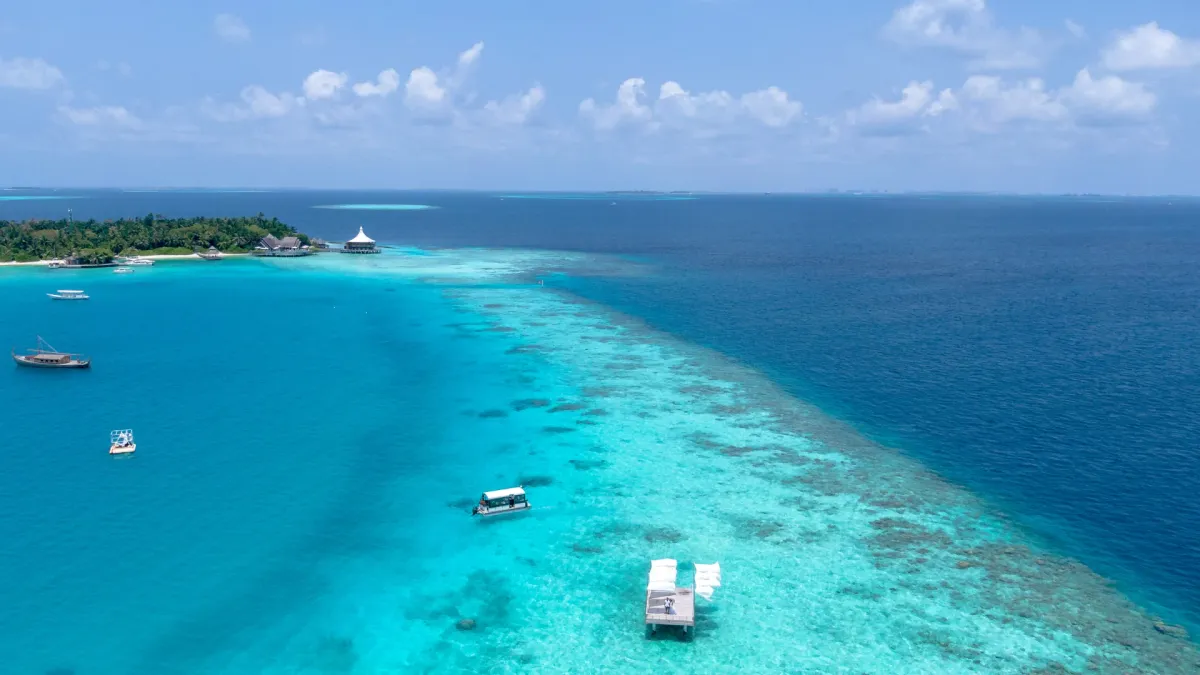
Growth Is Only Valuable If You Protect What Creates the Value
Will MitchellSeptember 10, 2026
Protecting Turneffe Atoll is more than a conservation win. It protects one of the natural assets that gives Belize lasting tourism, real estate and investment value.
There is a version of development that looks successful right up until the thing people came for is gone.
We have all seen places where that happened. A coastline becomes popular, then busier, then more expensive. Development accelerates. More rooms get built, more roads get cut, more land gets cleared, and for a while all of that looks like progress. Then, slowly, the qualities that made the place exceptional start to disappear under the weight of the demand they created.
That is why the recent agreement protecting roughly 17,000 acres at Turneffe Atoll matters far beyond conservation circles.
Under the agreement, those lands remain publicly owned and are being held in an irrevocable conservation trust. Management will involve the Turneffe Atoll Sustainability Association and the Turneffe Atoll Trust, while protections are also being strengthened around important flats-fishing habitat. The agreement is also expected to support a new University of Belize marine research facility, with BZ$2.2 million already being secured and additional research funding targeted beyond that.
On paper, that is an environmental story. I think it is also an economic one.
Belize does not compete by having the biggest cities, the most hotel rooms or the most developed coastline in the Caribbean. It competes because an enormous amount of what people travel here to experience still exists in a form that feels remarkably intact. The reef is real. The fishing is real. The marine life is real. You can still get far enough away from everything that the place feels like Belize rather than a tropical version of somewhere else.
That distinction has economic value precisely because it is difficult to reproduce.
A resort can be rebuilt. A restaurant can reopen. A new dock can replace an old one. But once a natural asset like Turneffe is seriously compromised, there is no realistic capital project that simply puts it back the way it was. Scarcity works both ways. It can make something more valuable, but only if you are disciplined enough not to destroy the thing that is scarce.
In real estate terms, preservation also creates certainty around scarcity. These 17,000 acres cannot gradually become another stretch of competing resorts, subdivisions or private compounds. That limits the amount of future development that can occur at Turneffe while protecting the natural setting that gives the surrounding market much of its appeal. Scarcity alone does not guarantee value, but limited development beside a protected and internationally recognizable natural asset is a much stronger long-term proposition than unlimited building in a destination that gradually erases its original advantage.
I think that is one of the most important ideas for anyone looking at Belize from an investment perspective. The country does need growth. It needs better infrastructure, more housing, more businesses, stronger services and more opportunity. But the best version of that growth is not the version that turns Belize into a smaller imitation of a much more developed market.
The advantage is in growing around what already makes the country unusual.
Turneffe is a good example because its value extends well beyond the boundaries of the atoll itself. Flats fishing supports guides, lodges, boat operators, restaurants, transportation companies and communities. Marine research builds knowledge and technical capacity. Conservation protects fisheries and tourism. The atoll is part of the broader story people tell themselves when they decide Belize is somewhere worth travelling to, returning to, living in or investing in.
None of those things fit neatly into a traditional real estate spreadsheet, but that does not make them irrelevant to real estate. Quite the opposite. Property values in destination markets are ultimately tied to the desirability of the destination. If the destination loses its identity, the property does not somehow escape that consequence.
That is why I would rather see Belize protect an asset like Turneffe now than spend decades trying to repair the damage later. Responsible development is not anti-growth. In places like Belize, it is part of what makes long-term growth possible.
There will always be pressure to treat undeveloped land as unused land. I think that is the wrong way to look at a place like Turneffe. Some land creates enormous value precisely because we resist the urge to cover it with something.
For Belize, protecting that value is not standing in the way of the investment story. It is part of the investment story.
Keep reading
Related Articles


On the market
Featured Properties
Explore some of our newest and most exclusive listings currently available in Belize.
Next step
Ready to start your search?
Connect with a buyer advisor who lives in Belize and knows the market inside out.