Back to Insights
The White Lotus Effect: Why Affluent Travellers Are Moving Beyond Conventional Luxury
Will MitchellSeptember 11, 2026
The White Lotus reflects a shift in what luxury means. For affluent travellers, privacy, access, character and a strong sense of place increasingly matter more than conventional displays of expense — and those are strengths Belize already has.
There was a time when luxury travel was fairly easy to define. Five stars, marble bathrooms, champagne on arrival, a famous name over the entrance. None of that has gone away, and there will always be a market for it, but the definition has widened. More and more, the experiences people remember are not necessarily the ones that look the most expensive. They are the ones that feel specific to a place and difficult to reproduce somewhere else.
That is one of the reasons The White Lotus has become such a cultural phenomenon. The resorts are beautiful, obviously, but they are never really the whole point. Hawaii, Sicily and Thailand are not interchangeable backdrops. Each place changes the atmosphere, the rhythm and the way the luxury itself feels. The setting does a huge amount of the work, which is probably why people talk about the destinations almost as much as they talk about the characters.
That same shift is showing up in travel more broadly. Julius Baer recently used the phrase “White Lotus effect” to describe the way affluent travellers are moving toward more private, remote and highly tailored experiences in places with a stronger sense of identity. Other luxury-travel research has been pointing in the same direction for a while. Once somebody has seen enough five-star hotels, another polished lobby is not necessarily what impresses them. Privacy, access, character and the feeling that they are somewhere genuinely distinctive start to matter more.
Belize fits naturally into that conversation because it has never needed to compete on scale. Its strength is not that it can outbuild larger Caribbean markets or create a more elaborate version of the same resort experience. Its strength is that so much of what people are looking for now already exists here in a very natural way: reef access, low-density coastline, jungle, rivers, islands, wildlife, smaller communities and a country that still feels recognizably like itself.
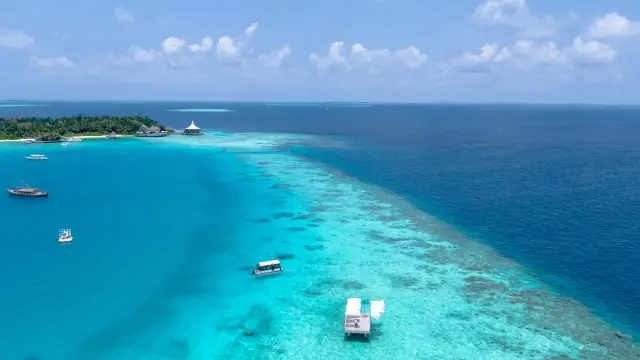
The reef is probably the clearest example. The Belize Barrier Reef Reserve System is the largest barrier reef complex in the Atlantic-Caribbean region and the second largest reef system in the world, with UNESCO recognizing not just the reef itself but the extraordinary range of atolls, mangrove cayes, lagoons and estuaries around it. For someone staying on Ambergris Caye or elsewhere along the coast, this is not some distant attraction that requires a carefully planned side trip. It is part of everyday life, which gives Belize something that is very hard to replicate elsewhere.
That distinction matters in a luxury market that is becoming more interested in access than display. A beautiful swimming pool can be built almost anywhere, but direct access to one of the world’s great marine environments cannot. The same is true inland, where jungle, caves, Maya sites, rivers and very different landscapes are all part of the same relatively compact country. You do not have to travel enormous distances to move from one kind of experience to another, and that gives Belize a variety that is unusually easy to access.
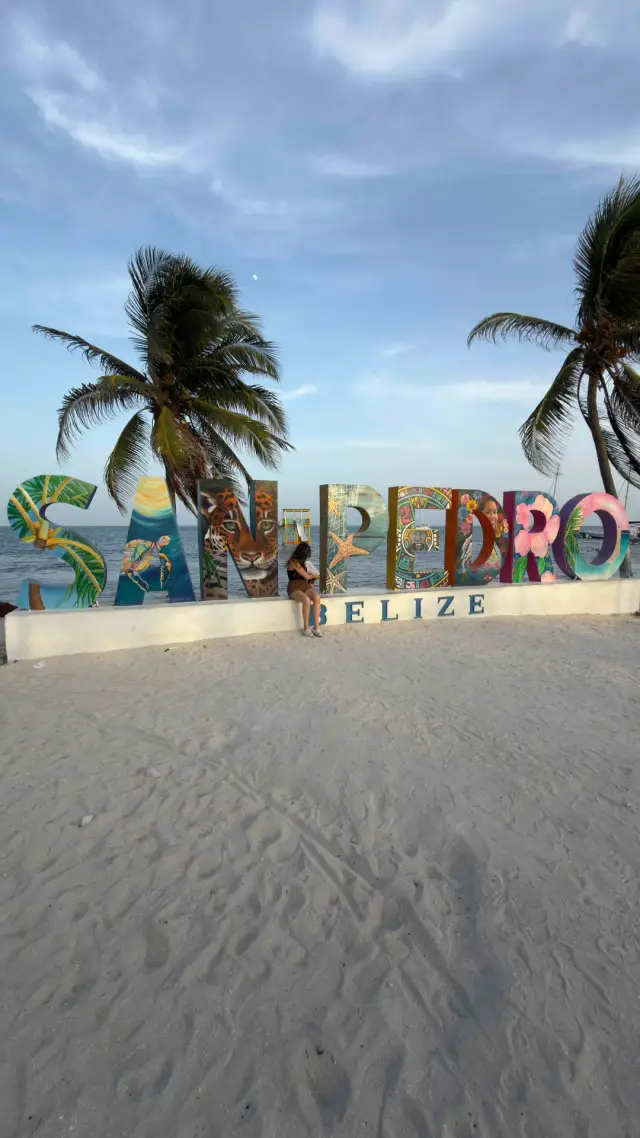
That variety is one of the country’s biggest advantages. Ambergris Caye offers an established island community with restaurants, boats and easy reef access. Placencia has a very different coastal character, Hopkins has its own rhythm and cultural identity, and Cayo changes the experience again almost completely. Belize’s own tourism planning recognizes several distinct destinations rather than treating the country as one uniform product, and that makes sense because people come here looking for very different things.
Frequent travellers also notice sameness very quickly. A luxury hotel can be beautiful and still feel as though it could be anywhere. The furniture changes, the menu changes, the view changes, but the experience itself can start to feel familiar. Belize is harder to flatten that way because the country itself tends to remain present in the experience. The geography, reef, communities, food, pace of life and way people move through the day are all part of what someone is actually coming for.
Privacy is another part of Belize’s appeal, but not in the usual resort sense. There is a real difference between privacy created by walls, security gates and controlled access, and privacy that comes from simply being somewhere with more space and fewer people around you. Belize can still offer that second kind naturally, which matters more as affluent travellers move away from conspicuous luxury and toward quieter, more private experiences. Accor has described the same shift toward intimacy, discretion and meaning, and Belize fits that direction well because it can offer comfort, beautiful homes, great hotels, private docks, good food and strong amenities without making the experience feel overbuilt or detached from the place itself.
This is also why the way Belize grows matters so much. The country’s tourism strategy has consistently emphasized development alongside protection of the natural and cultural assets that make it competitive in the first place. That should not be treated as some side issue or as a tension between conservation and economic growth. If the things people value most are reef access, coastline, privacy, space, natural beauty and a strong sense of place, then protecting those things is part of protecting the long-term economic value of the destination.
The same logic carries into real estate. Some of the strongest properties in Belize are strong because they combine things that are genuinely finite: waterfront, privacy, enough land to create space, reef access, established communities and proximity to infrastructure. Those combinations do not become easier to find as a market matures. In most cases they become harder, which is why scarcity in Belize is not just a marketing word when the underlying asset is actually limited.
There is only so much coastline. There are only so many properties with direct water access, only so many places where privacy and infrastructure overlap, and only so many locations where someone can be close enough to restaurants, services and transportation without feeling surrounded by development. As Belize continues to grow, those combinations become more valuable because they become harder to recreate.
What I find especially interesting is that Belize does not need to reinvent itself to benefit from this shift in travel. The opportunity is not in trying to become a more heavily developed version of another Caribbean market. It is in understanding that the qualities people are increasingly willing to pay for are already here, and then growing in a way that keeps those qualities intact.
That is probably the most useful connection to The White Lotus. People may tune in for the characters, but the places are a huge part of why the show works. Sicily feels like Sicily. Thailand feels like Thailand. The setting is not just decoration around the story; it is part of what gives the experience its value.
Belize has that same advantage in real life. It does not need to manufacture a sense of place because it already has one, and as affluent travellers become more selective about where they spend their time, that matters more. Privacy, access, character and experiences that cannot be duplicated everywhere else are becoming stronger markers of luxury, and Belize is unusually well positioned because so much of what people are now looking for was already here.
On the market
Featured Properties
Explore some of our newest and most exclusive listings currently available in Belize.
Next step
Ready to start your search?
Connect with a buyer advisor who lives in Belize and knows the market inside out.